

Tips on Designing a Great Booth for Your Next Trade Show

An example of our booth design for Wind Charter Brazil at Boot Dusseldorf, Germany, 2024.
The summer holidays are coming to an end, and it’s time to start focusing on the upcoming business events like trade shows and expos. Deadlines quickly approach, and stress levels can skyrocket when you haven't had time to plan things thoroughly. The last thing you want is to end up with poor business representation, which not only wastes money on graphics but also costs you valuable partnerships.
That’s why we’ve created this guide to help you make the most of your trade show appearance, save your designer’s time, and protect your nerves before the deadline.
With over four years of experience designing booths for trade shows, particularly in the yacht charter and nautical industries, we’re sharing valuable tips from our past experiences with clients. These tips helped our clients represent their business in the best possible light and attract the right partners or customers at the expo.
Are you ready? Let’s get started!
1. Understand Your Booth Type and Layout
Start by understanding the basics. What kind of booth did you book? Do you know its position on the expo layout? Are there any limitations on what you can include?
Consider the following questions:
Do you have graphics included in the package?
Are you planning to have furniture, and where will it be positioned?
Will you use a large TV screen for presentations?
Different trade shows and booth options offer different possibilities. Understanding these aspects upfront will guide your design process.
2. Carefully Review the Booth Design and Delivery Instructions
Before diving into the design, familiarize yourself with the booth design and delivery instructions. Mistakes often happen here, and they can cost you time and money. Some expos charge extra for revisions, so it’s in your best interest to get it right the first time.
Make sure you or your designer thoroughly read the guidelines. Here are some common terms you might encounter:
Prepress File: A file properly prepared for print, usually in .PDF format.
DPI Resolution: The quality of resolution; typically 72 dpi for digital use, 150 dpi for medium print quality, and 300 dpi for high-quality print.
Vector File: Can be scaled indefinitely without losing sharpness and quality, ideal for logos and text.
Bleed Area: A small area around the format that acts as a safe zone during production.
CMYK and RGB Colors: RGB is for digital displays, while CMYK is for print. Vibrant RGB colors might appear dull when printed.
3. Define Your Key Messages and Communication Tone
Consider what messages you want to communicate through your booth design. What tone of communication do you want to use? How do you want visitors and exhibitors to feel when they see your booth?
Here are some guiding questions:
What are the services or products you want to highlight?
Do you have a unique value proposition you want to emphasize?
What is the main idea you promote or sell?
Defining these elements early will help create a booth that effectively communicates your brand’s core message.
4. Leverage Your Brand Style Guide

An example of a brand style guide with definage usage of visual identity for Navalos Charter.
If you have a brand style guide, use it to create a cohesive and visually appealing booth. Your brand style guide should cover essential elements like logo positions, colors, fonts, iconography, and imagery.
Consistency with your brand’s visual identity will make your booth more recognizable and help reinforce your brand message.
5. Use Infographics and High-Quality Images
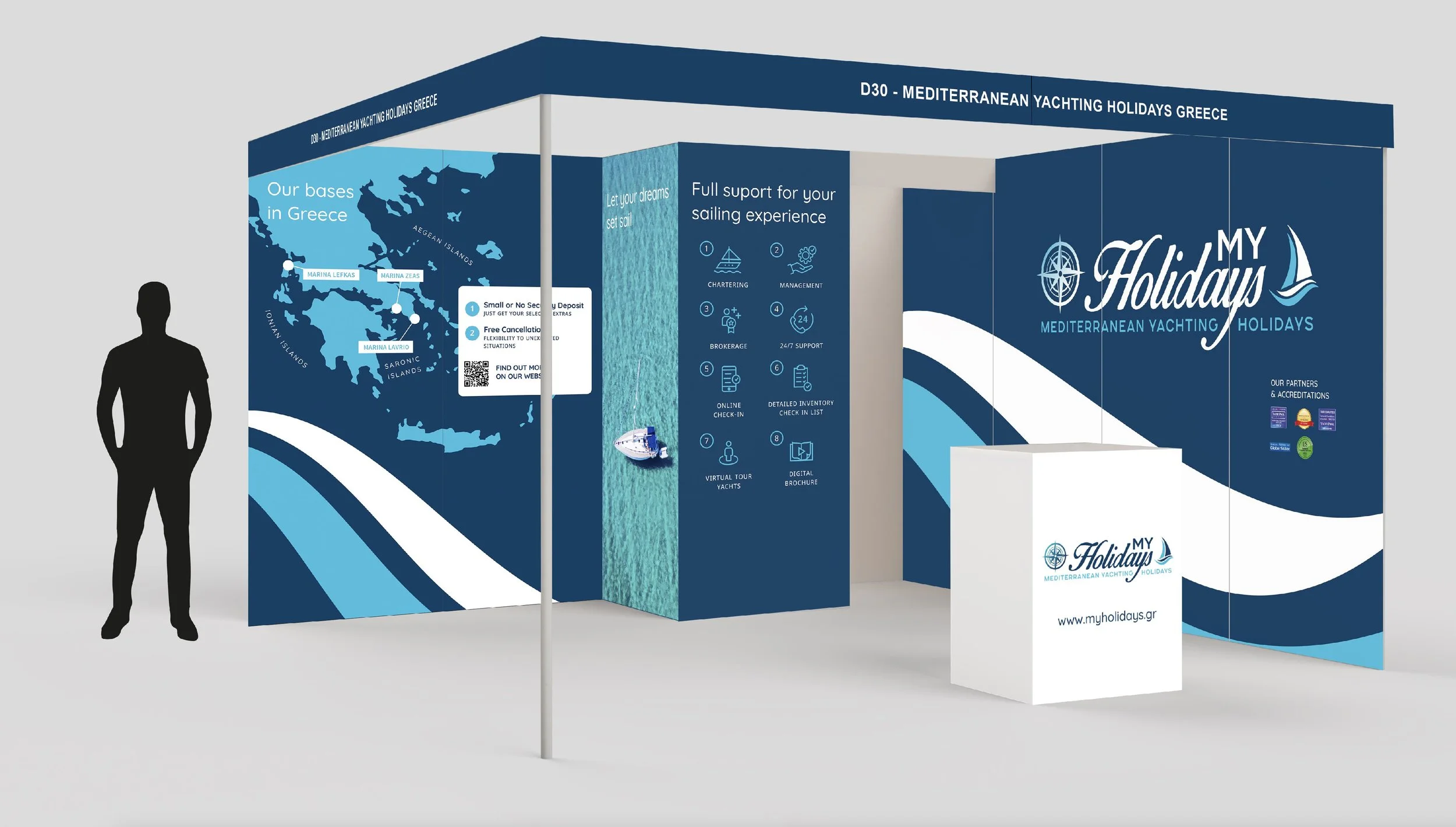
An elegant booth example with the usage of infographics for the Mediterannean Yachting Holidays Greece.
Visual content plays a crucial role in engaging visitors. Consider using infographics to present data or information in an easily digestible format. Infographics like icons, highlighted elements, and numbers can make your booth more interactive and appealing.
If you plan to use photographs, ensure they are of high quality. Something that looks great on a laptop or mobile screen might not translate well to a large surface. Aim for a resolution of 150-200 dpi for images viewed from 1-2 meters away to ensure moderate clarity.
6. Stand Out from Your Competitors
Research your competitors' booth designs to ensure yours stands out. You don’t want to look identical to them, as this can lead to confusion among visitors and potential partners. Differentiate your booth with unique design elements that reflect your brand’s personality.
7. Consider Using Booth Prototypes and Simulations

An example of a 3D booth prototype for Wind Charter Brazil.
While not mandatory, creating a simulation of your booth design can be incredibly helpful. It allows you to visualize how the graphics will look once applied and can assist the company assembling your booth in understanding where each piece goes.
Prototyping reduces the risk of errors and ensures everything is set up correctly.
8. Plan for Revisions and Meet Delivery Deadlines
Don’t wait until the last minute to finalize your booth design. Allow time for revisions and feedback, especially if you’re working with an external designer. Many people submit their designs right before the deadline, which can lead to mistakes and higher costs.
Conclusion
Designing a great booth is about more than just aesthetics. It’s about communicating your brand’s message effectively, standing out from the competition, and creating an engaging experience for trade show visitors. By following these tips, you’ll be well on your way to a successful trade show experience. 😊
If you need any help with your booth design feel free to send us a message with your case at office@disegnat.com
